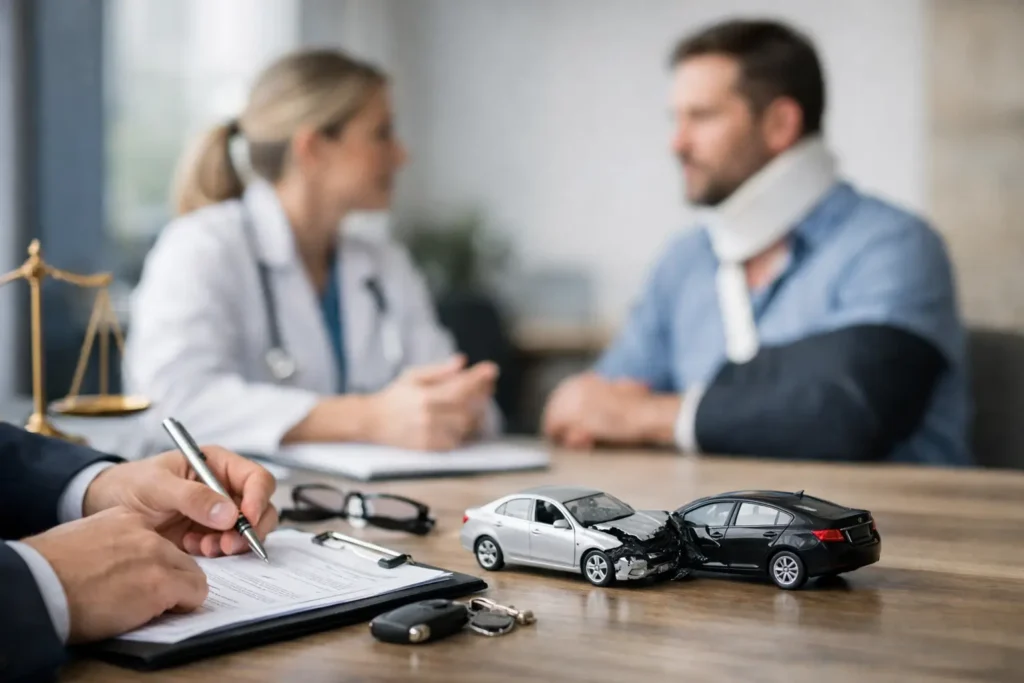
The first hours after a crash often decide what the next six months look like. People usually think the hard part is the impact itself. In many cases, what happens after car accident situations becomes just as serious – medical treatment, insurance pressure, missing evidence, disputed fault, and financial losses that keep growing after the scene is cleared.
If you are injured, shaken, or unsure who is responsible, clarity matters. The legal and insurance process starts quickly, and early mistakes can weaken a valid claim. The right response protects your health first, then your rights.
What happens after car accident scenes are cleared
Once police leave and damaged vehicles are moved, the case does not pause. It begins. Insurance companies open claim files, adjusters review statements, and medical records start to shape how your injuries will be valued. If there is disagreement about fault, every detail becomes relevant.
This is usually the stage where people underestimate risk. They may assume the insurer will simply review the bills and make a fair offer. Sometimes the process is straightforward, especially when fault is obvious and injuries are minor. Often, it is not. If treatment lasts longer than expected, if symptoms worsen, or if the other driver changes their version of events, the claim becomes more complicated very quickly.
The legal question is not only whether an accident happened. It is whether liability can be established, whether damages can be documented, and whether the insurer has a reason to argue that your losses are smaller than you say.
Your medical care comes before the claim
The most important step after any collision is medical attention. Not because it helps a case, but because some injuries do not fully appear at the scene. Concussions, soft tissue damage, internal injuries, and spinal problems can develop over hours or days. Adrenaline often hides symptoms.
From a legal standpoint, prompt treatment also creates a timeline. If there is a long gap between the crash and the first doctor visit, the insurance company may argue that the injury came from something else or that it was not serious. That does not automatically defeat a claim, but it creates a problem that may need to be explained.
Follow-up care matters too. If a physician recommends imaging, therapy, specialist care, or work restrictions, those instructions should be taken seriously. Skipping treatment can hurt recovery and give the insurer another argument against compensation.
The insurance investigation starts fast
After notice of the accident, insurers usually begin gathering information immediately. They may request a recorded statement, photographs, repair estimates, medical authorizations, or wage documentation. Their goal is not necessarily to help you understand the full value of your claim. Their goal is to evaluate exposure and control payout.
That does not mean every adjuster acts in bad faith. It does mean you should be careful. Early conversations often happen before the full extent of injury is known. A person who says, “I think I am okay,” from a hospital waiting room may later learn they are not okay at all.
Property damage claims often move faster than bodily injury claims. The car can be inspected, repaired, or declared a total loss within days or weeks. Injury claims take longer because treatment must be understood before damages can be measured. A fast settlement offer can be tempting when bills are due, but a claim settled too early usually cannot be reopened.
Evidence becomes the backbone of the case
A strong claim depends on proof. Police reports help, but they are only one part of the record. Photos of vehicle damage, skid marks, debris, road conditions, visible injuries, and the scene itself can all matter. Witness names and contact information can become critical if fault is later disputed.
Medical records, receipts, pay stubs, employer letters, and repair invoices also play an important role. So does a simple timeline written by the injured person while memories are still fresh. Pain levels, limitations, missed family events, sleep disruption, and reduced ability to work can all support damages when documented clearly.
In more serious cases, additional evidence may be needed. That can include surveillance footage, black box data, phone records, accident reconstruction, or expert medical review. The more severe the injury and the greater the financial exposure, the more aggressively liability and damages are likely to be challenged.
Fault is not always as clear as it seems
Many people assume fault is obvious because they know what happened. The insurer may see it differently. Rear-end collisions are often straightforward, but even then, defenses may be raised. In intersection crashes, lane-change collisions, multi-vehicle accidents, and pedestrian cases, competing accounts are common.
Some jurisdictions reduce compensation if the injured person is found partly at fault. That means the case may turn on small details – speed, signaling, weather, visibility, distraction, or whether medical treatment was delayed. These issues can change the value of a claim significantly.
This is where early legal analysis can make a real difference. It is easier to preserve evidence and frame the facts correctly at the beginning than to repair a damaged claim months later.
What compensation may include
Car accident compensation is not limited to the repair bill. Depending on the facts, a claim may include emergency care, hospital bills, surgery, rehabilitation, medication, future treatment, lost wages, loss of earning capacity, and pain and suffering. In serious cases, long-term disability, home modifications, and ongoing care may also be part of the damages.
There is no universal payout chart that fairly captures every case. A broken wrist for a desk worker and the same injury for a surgeon or tradesperson may have very different financial consequences. The same is true for back injuries, head trauma, and psychological effects such as anxiety or post-traumatic stress.
The value of a claim depends on liability, medical proof, consistency of treatment, insurance coverage, and the credibility of the evidence. That is why online averages are usually misleading. They ignore the details that actually drive results.
When the claim becomes a legal dispute
Some claims settle through negotiation without filing a lawsuit. Others do not. If the insurer denies liability, minimizes injury, delays unreasonably, or makes an offer that does not reflect the losses, legal action may become necessary.
A lawsuit does not mean a trial is certain. It often means the case enters a more formal stage where evidence is exchanged, witnesses may be questioned under oath, and deadlines force the other side to take the claim more seriously. Still, litigation has trade-offs. It can increase pressure and improve leverage, but it also takes time, documentation, and patience.
For clients dealing with serious injuries or cross-border issues tied to Italy or the United States, the legal strategy may require more than routine claim handling. Jurisdiction, insurance structure, residency, and language can all affect how a case should be approached. That is one reason firms such as Avvocati.Us focus on direct legal guidance instead of standardized processing.
Common mistakes after a crash
The most damaging mistakes are usually made early. People delay treatment, give broad recorded statements before they know the extent of their injuries, accept quick settlements, post on social media, or fail to preserve documents. None of these mistakes automatically destroys a claim, but each one gives the other side something to use.
Another common problem is assuming that if the vehicle damage looks minor, the injury claim will also be treated as minor. Insurers often make that argument. Yet low-speed collisions can still cause meaningful injury, especially involving the neck, back, or head. The issue is not how dramatic the crash looked. The issue is what the medical evidence proves.
When to speak with a lawyer
Not every accident requires legal representation. If there is no injury, no dispute, and no meaningful loss beyond minor property damage, the claim may be manageable without counsel. But if you needed medical care, missed work, face lasting symptoms, or are hearing blame-shifting from the other side, legal advice is prudent.
The same is true if a loved one was seriously injured, if a commercial vehicle was involved, if multiple vehicles were part of the crash, or if the insurer is pushing for a fast resolution. An experienced lawyer does more than file paperwork. Counsel protects evidence, values the case properly, manages communication, and prevents avoidable errors.
After a crash, people want normal life back as quickly as possible. That is understandable. But the pressure to move on should not come at the cost of your health or your rights. A careful response now can spare you months of financial and legal trouble later. If the facts are serious, treat them that way from the start.