
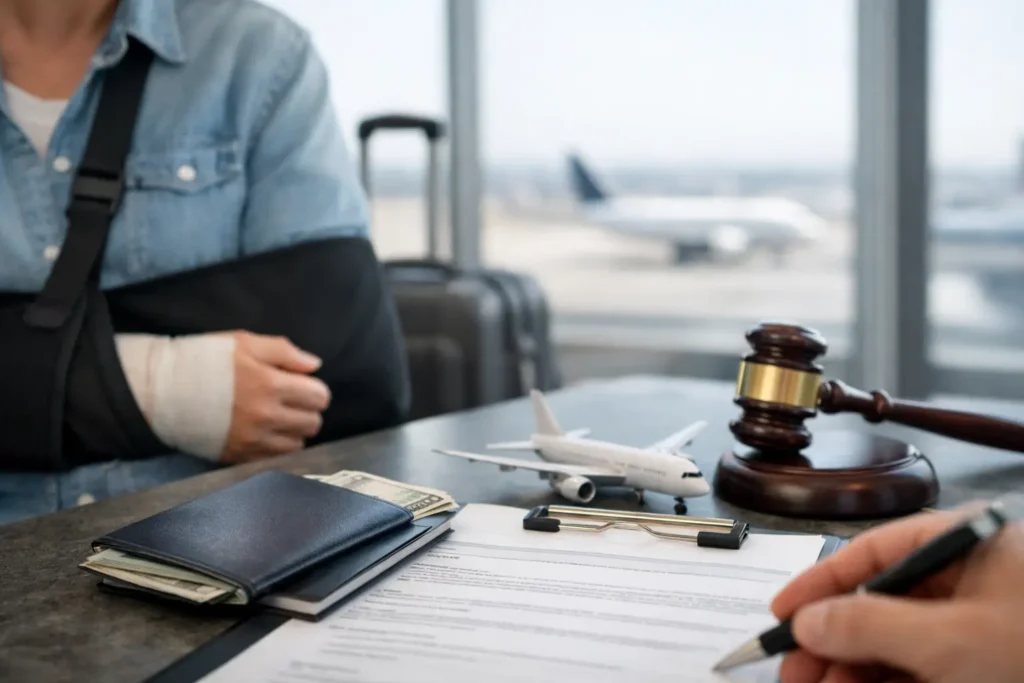
An injury overseas can turn a normal trip into a legal and financial mess within hours. If you need to file injury claim abroad, the first decisions you make matter more than most people realize. Medical records, local reports, insurance notice, and jurisdiction rules can all affect whether you recover compensation or lose leverage before your case even starts.
When you should act immediately
Cross-border injury claims rarely improve with time. Evidence disappears, witnesses go home, camera footage gets erased, and local deadlines may be much shorter than what you expect in the United States. That is why the right approach is not to wait until you are back home and feeling better. It is to start protecting the case while the facts are still fresh.
The first priority is always medical care. Get examined by a qualified provider where the injury happened, even if you think the harm is minor. A delayed diagnosis gives insurers and opposing parties room to argue that something else caused your condition. Follow-up treatment when you return home is just as important because it creates a clear medical timeline.
The second priority is documentation. If you are physically able, take photographs of the scene, your injuries, the vehicle or property involved, warning signs, road conditions, and anything else that shows how the incident happened. Keep receipts, travel records, names of witnesses, and every communication from hotels, rental companies, tour operators, or insurers.
Can you file an injury claim abroad or at home?
This is where many people get misled. The answer depends on who caused the injury, where it happened, what contracts apply, and whether the responsible party has operations, assets, or insurance in another country. Sometimes the proper claim must be brought in the country where the accident occurred. In other cases, a related company, insurer, or business presence may open a path to pursue compensation closer to home.
Jurisdiction is not just a technical detail. It affects the court process, available damages, legal costs, deadlines, and how evidence must be presented. A road traffic collision in Italy, for example, may involve Italian civil liability rules even if the injured person lives in New York or London. A resort injury might raise questions about local premises liability law, booking terms, and whether the operator marketed services internationally.
That is why early legal review matters. Filing in the wrong place, or waiting too long while trying to figure it out alone, can damage a strong case.
The key evidence you need to file injury claim abroad
The basic rule is simple: if you cannot prove what happened, who was responsible, and how the injury affected you, compensation becomes harder to secure. In an international claim, that proof must often cross language, insurance, and legal system barriers.
Medical records and treatment history
Your records should show the initial injury, symptoms, diagnosis, treatment plan, and prognosis. If you received care in more than one country, those records need to line up. Gaps and inconsistencies are common pressure points for insurers.
Official reports
Police reports, incident reports, workplace reports, or transport authority records can be critical. Ask for a copy or reference number before you leave the country if possible. In some places, obtaining the report later can be slow or difficult.
Witness statements
A witness who saw the event can strengthen liability. Get full names, phone numbers, email addresses, and a short written or recorded account if they are willing. People become harder to locate once travel ends.
Financial losses
Keep evidence of medical bills, transportation costs, hotel changes, canceled flights, lost income, rehabilitation, and out-of-pocket expenses. If the injury affects your ability to work, document that clearly with employer records or business records.
Who may be legally responsible
People often assume only the immediate wrongdoer matters. In reality, international injury claims can involve several parties at once.
A driver may be responsible in a vehicle accident, but so may the vehicle owner, employer, insurer, or commercial operator. In a hotel or rental property injury, responsibility may rest with the property owner, management company, maintenance contractor, or event organizer. A tour-related injury can involve the local operator, booking platform, transport provider, or parent company.
This matters because the financially viable defendant is not always the most obvious one. A legal strategy should identify who had control, who carried insurance, and who can realistically satisfy a judgment or settlement.
Insurance can help, but it can also complicate the case
Travel insurance, health insurance, rental vehicle coverage, employer policies, and liability insurers may all become part of the picture. That does not mean they will make the process easy.
Some policies cover medical treatment but not full legal damages. Some require immediate notice. Some contain exclusions for certain activities, vehicles, or countries. Others may try to settle quickly for far less than the case is worth.
Be careful with recorded statements and early settlement offers. Insurers often contact injured travelers before they understand the full extent of their injuries. Accepting payment too early can limit your options later, especially if surgery, long-term therapy, or lost earning capacity becomes part of the claim.
Common problems in overseas injury cases
The biggest problem is delay. People focus on getting home, returning to work, and dealing with pain. By the time they speak with counsel, key records may be missing and deadlines may be close.
Language barriers are another serious issue. A translation that looks accurate may still miss legal meaning. Medical terms, accident descriptions, and official findings must be interpreted carefully, especially when they will be used in negotiations or litigation.
Then there is the problem of legal mismatch. Many injured people expect U.S.-style compensation rules, but another country may handle non-economic damages, court fees, or fault allocation very differently. That does not mean the claim is weak. It means the case needs a strategy built around the law that actually applies.
What damages might be available
The value of an overseas injury claim depends on the governing law, the severity of injury, and the quality of proof. In many cases, compensation may include medical expenses, rehabilitation costs, lost wages, reduced earning capacity, travel-related losses, and pain and suffering or similar non-economic damages.
But this is not uniform from one country to another. Some systems are more formula-based. Others allow broader judicial discretion. Some separate temporary disability from permanent impairment in ways that are unfamiliar to U.S. claimants. A serious case may also require expert evidence on future care needs, work limitations, and long-term prognosis.
Why lawyer access matters in cross-border claims
This is not the kind of case that benefits from being passed through a call center or handled as a standard insurance file. Cross-border injury matters often require direct lawyer involvement from the start because jurisdiction, evidence collection, insurer communication, and local procedure are all moving at the same time.
A client dealing with pain, medical treatment, and financial stress needs clarity, not generic updates. That is especially true when the case touches Italy, the United States, or both, where legal coordination may require fast decisions and precise handling. A firm such as Avvocati.Us can add value when the case demands cross-border legal strategy rather than one-country assumptions.
What to do before you leave the country where the injury happened
If you are still abroad, do not leave with only a verbal account of what happened. Ask for copies of medical documents, incident reports, prescriptions, and billing records. Confirm the legal identity and contact details of the business or individual involved. Preserve booking confirmations, tickets, rental agreements, and insurance information.
If the injury happened at a hotel, on a tour, in a rental vehicle, or on commercial premises, notify management in writing and keep a copy. If police attended the scene, ask how to obtain the official report. These small steps often become decisive later.
The right time to get legal advice
The right time is earlier than most people think. You do not need to wait for a final diagnosis, and you should not wait until an insurer denies the claim. Early advice helps protect evidence, identify the correct defendant, assess jurisdiction, and avoid mistakes that weaken leverage.
This does not mean every case should immediately go to court. Many strong claims resolve through negotiation. But effective negotiation depends on having a legally sound case file from the beginning.
If you were injured overseas, treat the matter like a legal issue from day one, not just a travel problem. The law can protect you, but only if the case is built carefully and quickly. The safest next step is to get clear advice before the other side defines the facts for you.
